

It's not difficult to learn the 7 different tones in a Major key of music. I often feel the need to emphasize the importance and value of the number system but I assume that knowing extended tones is a given.
That's not always the case. Not every aspiring piano player knows about extended tones. Extended Tones are the necessary elements that create extended chords. It can be a confusing subject for beginners because these tones have a dual function.
In this article, I want to share with you how to unlock extended tones with easy math. But I would like to first recap the 7 different notes in a Major key of music.
We'll use a handful keys as an example.
The key of C Major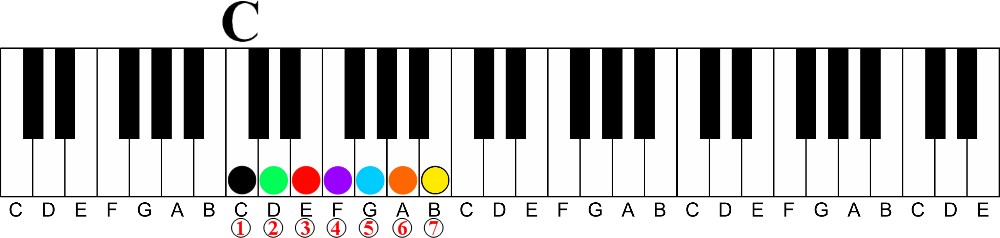 The key of F Major
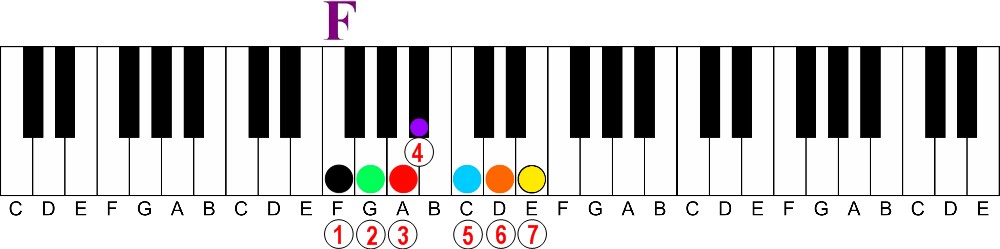 The key of G Major
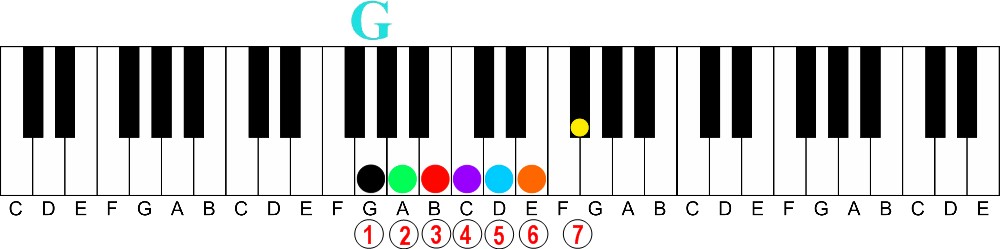 Any diatonic chord (chords that are in the key) can be constructed from these 7 different tones. If however, you wish to build extended chords, you should be proficient with the higher extensions that define them.
Higher extensions are certain tones that exist in a Major key but are referred to as a higher number for a specific reason. They're used to create extended harmony. In other words, they're used to create extended chords.
An extended chord will always first and foremost have a 7th tone added to a major triad. The 7th tone can be a Major 7th or a flatted 7th.
C Major 7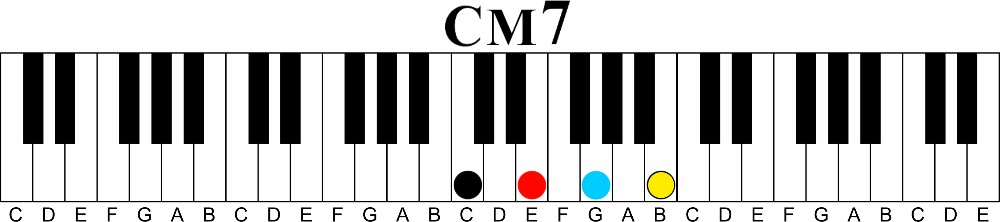
C Flatted 7th (or C dominant 7)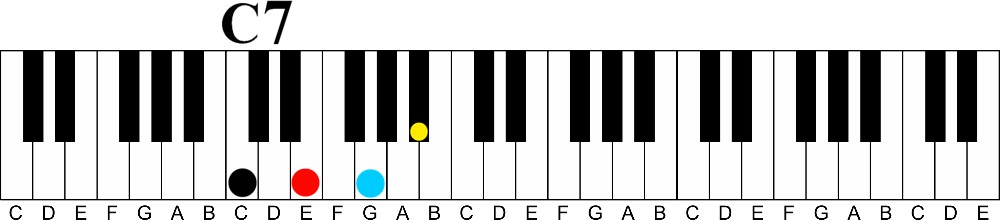
Just remember, if you don't have either one of these 7ths in a chord, the chord will not be an extended chord when you add the extended tones to them.
The number system extends beyond 7 and proceeds all the way up to 13.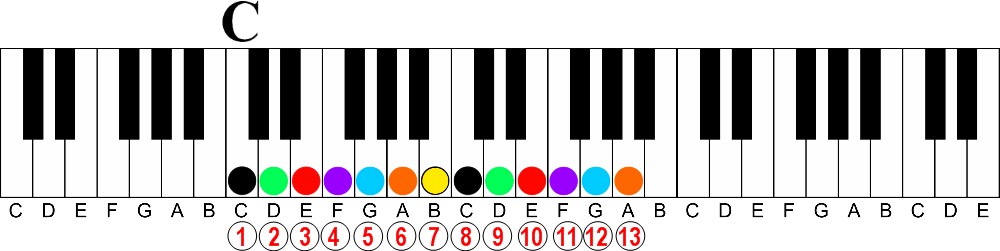 Because there's a Major 7th tone in this chord it would be by definition notated as C Major 13. I didn't include the 11th in this 13th chord because the 3rd is present.
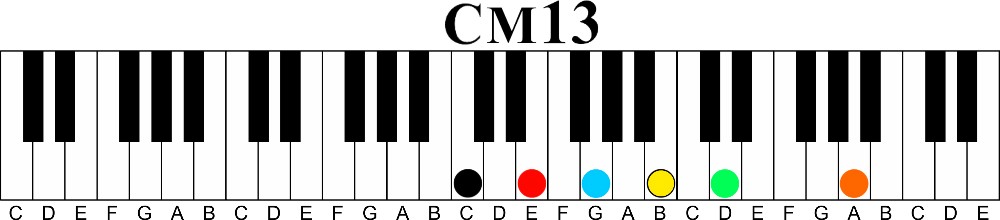 If we have the same tones in a chord, but instead have a flatted 7th (also known as a dominant 7th), we'll have a C13 chord.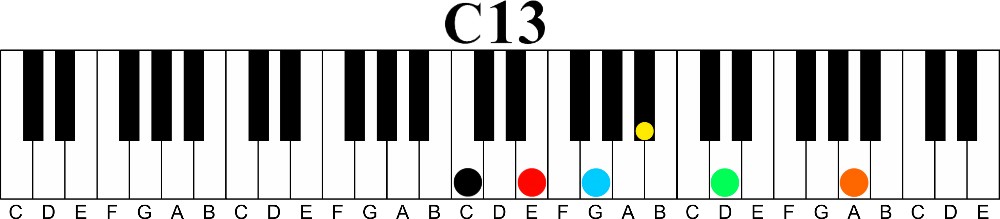
Chords don't always extend to the highest tone. You may have any one of the following: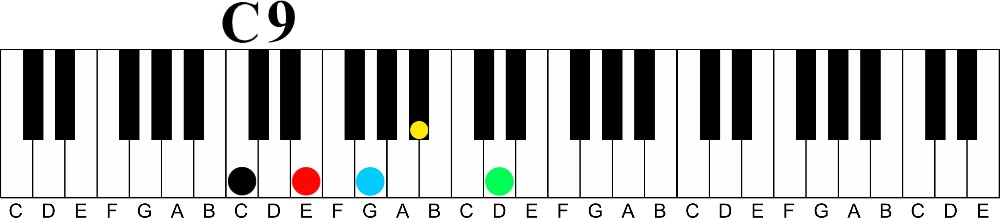
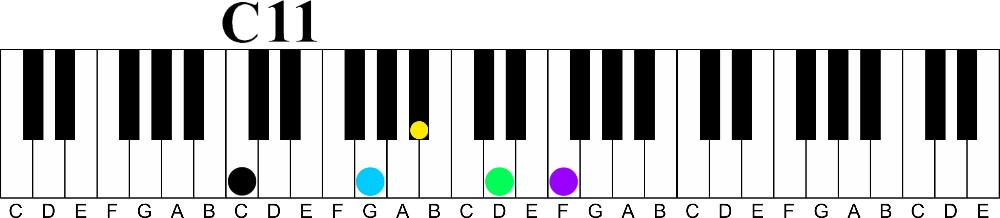 You may have noticed that extending the tones past 8 gives these notes two different numbers. Again, extended tones are referred to when a 7th is present.
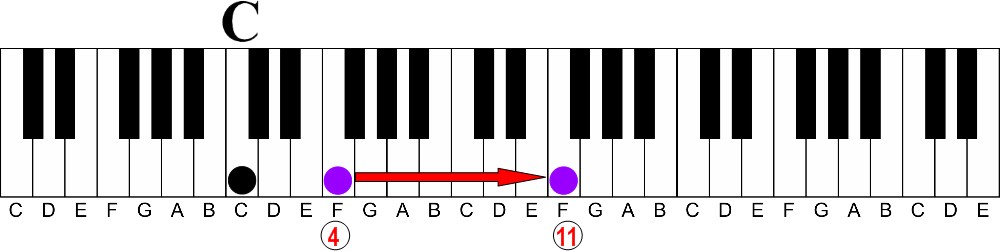
The 2nd is the same as the 9th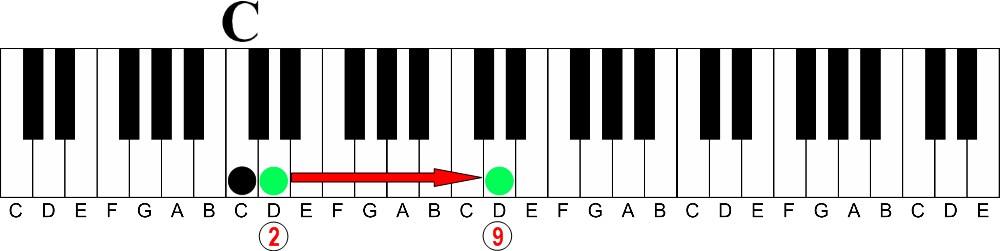 The 4th is the same as the 11th
 The 6th is the same as the 13th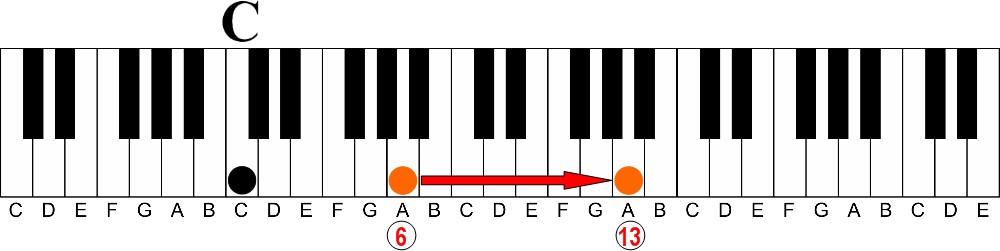
The easist way to find higher extentions is simple mathematical subtraction. Remember earlier when I said a 7th (Major or flatted) must be present for you to have an extended chord?
Simply subract 7 from whatever the higher extended number is and it will give you it's lower counterpart making it easy to know what the higher extended tone is.

If you have a 9th chord, subtract 7 from 9 and it tells us that the 9th is the same tone as the 2nd
9-7=2
If you have a 11th chord, subtract 7 from 11 and it tells us that the 11th is the same tone as the 4th
11-7=4
If you have a 13th chord, subtract 7 from 13 and it tells us that the 6th is the same tone as the 13th
13-7=6
This simple equation is only necessary when you're not familiar with higher extensions. You won't need it as you progress and become more familiar with extended chords. But I can say it helps to get you unstuck if you find yourself confused about extended tones.
I also wish to point out that the illustrations in this article simply define the chords and aren't indicative of the way chords are voiced when you play them in real music. This definitely goes back to understanding the number system and how incredibly valuable it is to know.
Until next time, Go Play!


Greg Lee
Latest posts by Greg Lee (see all)
- What is a minor/Major 7 Chord? - October 26, 2023
- 7 Chord Substitutions that Professionals Use - October 19, 2023
- 5 Simple Chord Tricks to Sound Amazing - October 5, 2023