

Triads are no doubt the workhorse chords of popular music. There are so many things you can do with them including creating more advanced chords. But, so many aspiring piano players will avoid advanced chords because they feel it's a daunting task to learn them.
This article is about 9th, 11th and 13th chords. These are extended chords and are found in almost all genres of  popular music.
Before moving into these more advanced chords, you should have a solid aptitude and faculty for playing the 12 Major and minor chords. These are also known as the 12 Major and minor triads.
These chords are the precursor to any other more advanced chords and without the competency of them, it's a frustrating experience to try to move to a higher level of playing.
In addition to these, you should be competent with the number system of all 12 Major keys of music. These are simply a numbered sequence of every note that a given key consist of.
So assuming you have a solid foundation of the aforementioned, let's move into 9th, 11th and 13th chords.
A Major key of music designates a number for each tone per the number system.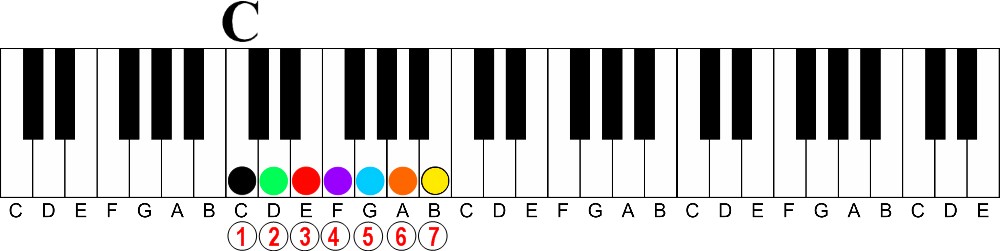 Even though there only 7 different notes in a key of music, the numbered sequence goes beyond 7. These are called higher extensions.
Your basic triad consists of the 1st, 3rd and 5th tones.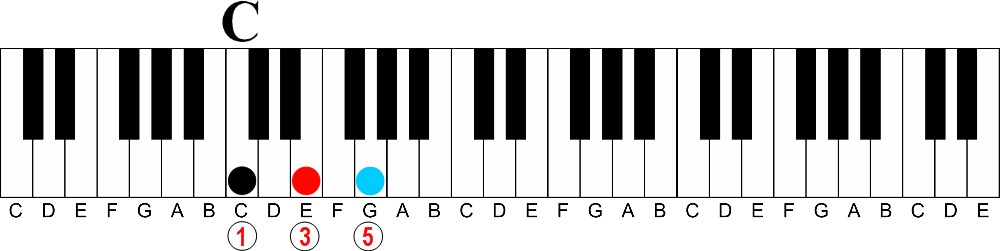 Chords are tertian which is another way to say they're constructed in 3rd intervals (or every 3rd note).
If you move to a minor 3rd interval beyond the 5th tone, you will land on the 7th which you can add to the basic triad. This transforms it into a Major 7th chord.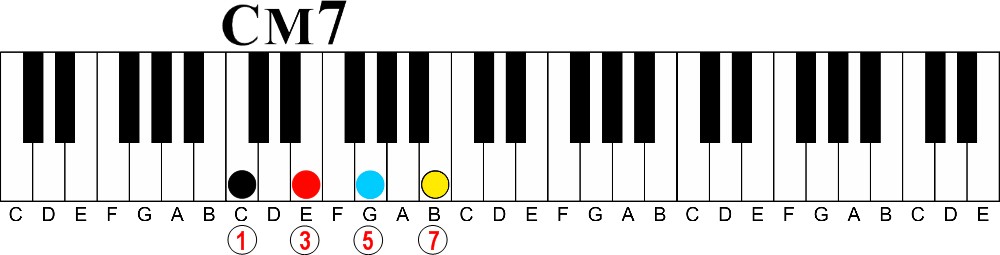 It's very common to lower the 7th a half step. This is a flatted 7th tone and creates what is called a dominant 7th chord. Musicians simply refer to it as a 7th chord.
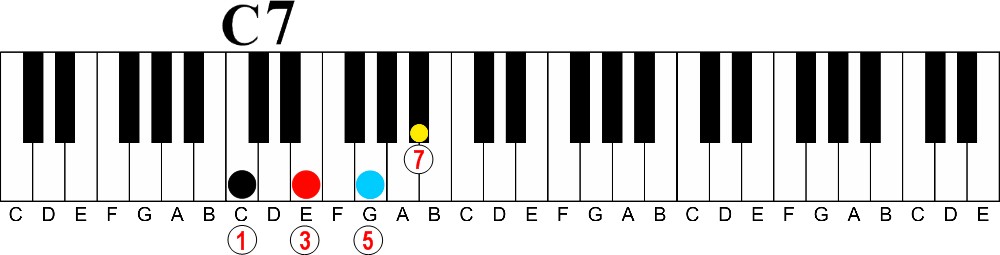 Be aware that the flatted 7th will occur on white keys as well as black keys.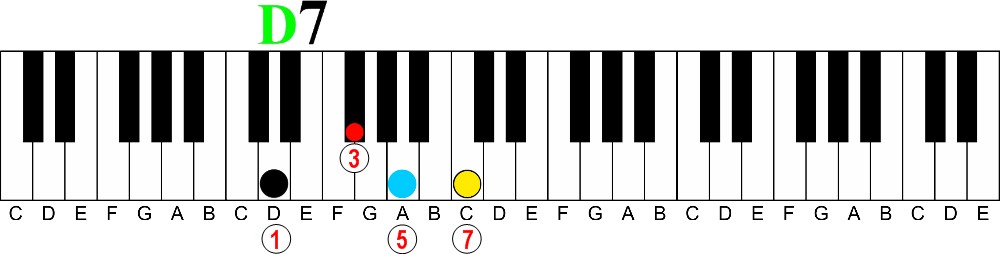
Now that we've established the flatted 7th tone and 7th chords, let's look at these higher extensions.
If you go beyond the Major 7th and continue counting up, you'll proceed all the way to the 13th tone. These tones are the higher extensions that I mentioned earlier.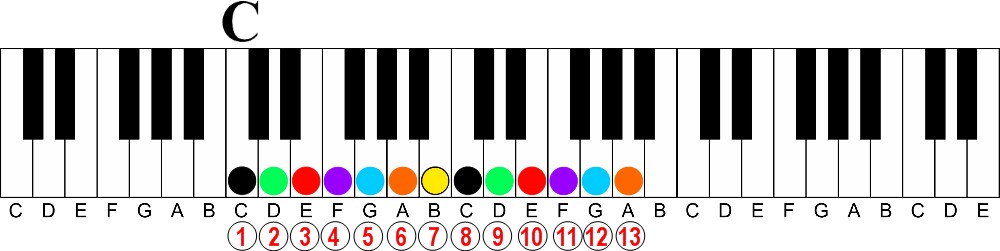
A very common question is why would you have the same tones referred to by different numbers.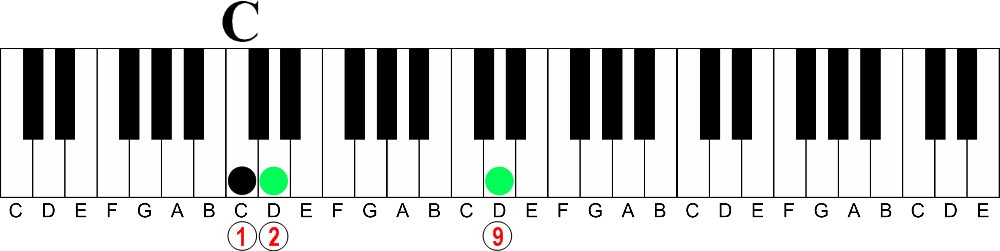
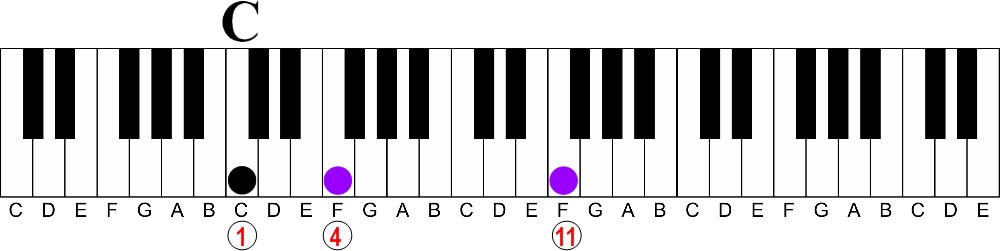
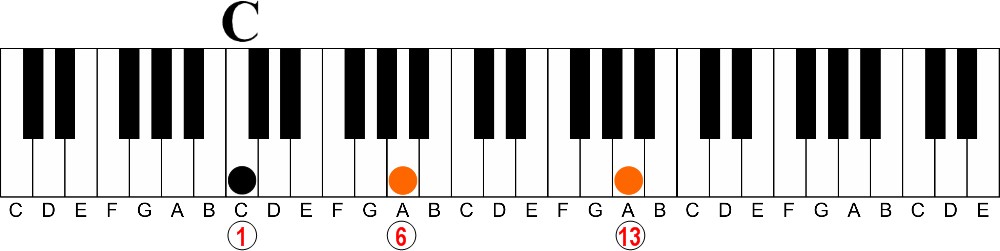 The differentiating factor of higher extensions is the presence of 1 type of tone that may be present in a chord.
That tone is the 7th. It can be the Major 7th or the flatted 7th as discussed earlier. This is what distinguishes the 2nd, 4th, and 6th from the 9th, 11th and 13th.
So if you wish to construct a C9 chord, you would build the C7 chord and then add the 9th tone to it.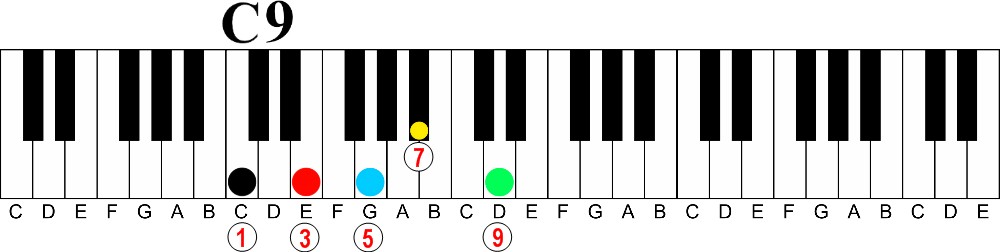
Beyond the 9th tone you can add the 11th. However, it's very uncommon to have the 3rd present so it's often omitted in an 11th chord. This extended chord has a suspended quality for this reason.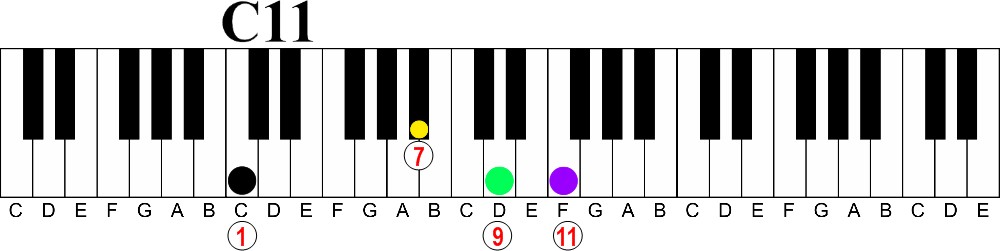 Beyond the 11th tone, you can add the 13th. This can have the 3rd present which makes it a Major chord.
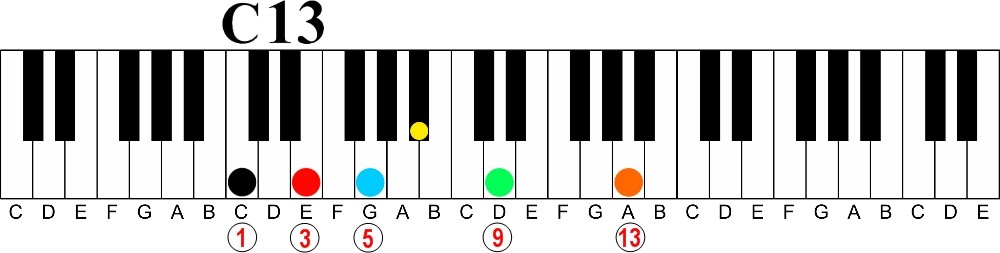 Or if the 11th is present, adding the 13th would create a 13th sus chord.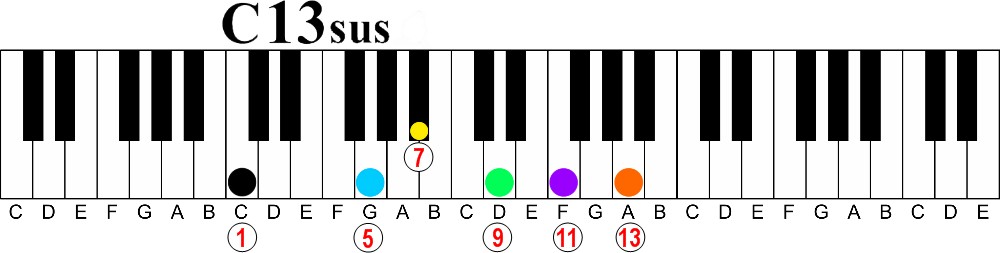

The C Major 7 chord with the 9th tone added is C Major 9.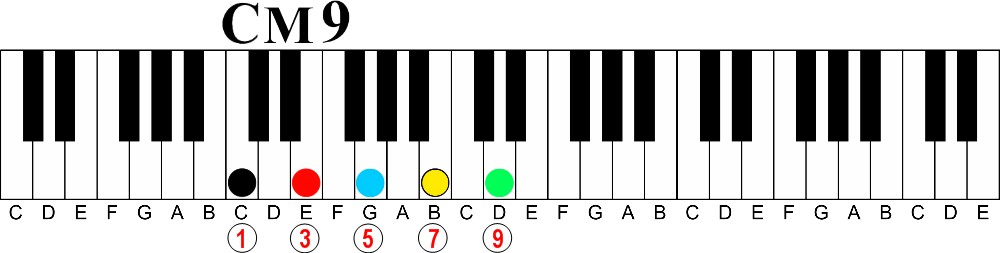 Adding the 11th to a Major 7th chord is just as uncommon as adding it to a flatted 7th chord. So the 3rd would be omitted and it would still be a very uncommon chord, especially outside of jazz music.
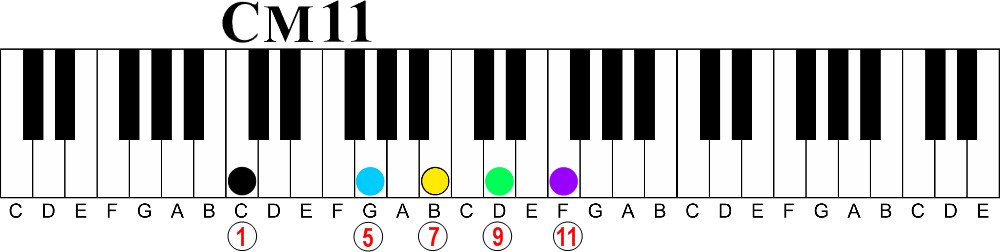 Adding the 13th tone to the Major 7th chord creates a Major 13th chord.
Now you've seen how simple it is to understand the concept of extended chords. Even though I've shared them with you in the key of C Major, you can create these extended chords in any key with any Major chord. When you do, you'll hear how much more professional they sound. Next article, we'll cover how all of these extensions can be easily translated into minor chords.
Until next time, Go Play!


Greg Lee
Latest posts by Greg Lee (see all)
- What is a minor/Major 7 Chord? - October 26, 2023
- 7 Chord Substitutions that Professionals Use - October 19, 2023
- 5 Simple Chord Tricks to Sound Amazing - October 5, 2023