

As a beginning piano player, I remember having the aspiration of just learning to make a pleasing sound on the keyboard. My limitations would restrict me to playing very basic sounding melodies. I was okay with that in the beginning. But before long, those single one note melodies left a lot to be desired.
If you want a more tasty sounding way to harmonize a melody, then I want to share with you the concept of playing 6th intervals under your melody notes. You can do this with any song. Of course, there are limitations at times and I'll fill you in on those too.
A 6th interval (or a 6th as I'll also refer to it) is of course two notes that are six notes from each other (inclusively) in the key you're playing in.
Let's use the key of C Major as an easy example.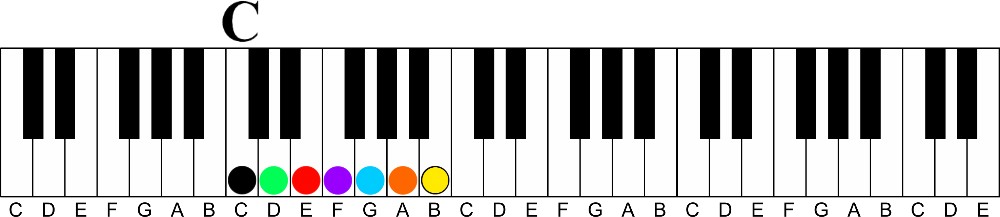 In any key of music, the notes that are a 6th interval apart are separated by 4 tones that are in the key. However, the most common way to conclude a 6th is simply to count from the starting note to the 6th note inclusively.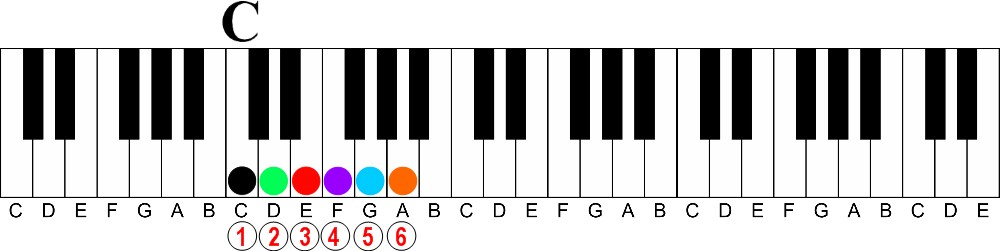
We're going to view each note in the key as the melody note. The harmony note (the 6th) is played underneath it. Remember the melody note is always on top and the harmonizing note is on the bottom. Although you can find 6th intervals by counting up to 6, there's an easier way to find them. You'll find that 6th intervals will give your melody a satisfying open sound.
In order to locate a 6th interval, find the 3rd interval above the tone. 3rd intervals are 3 notes apart.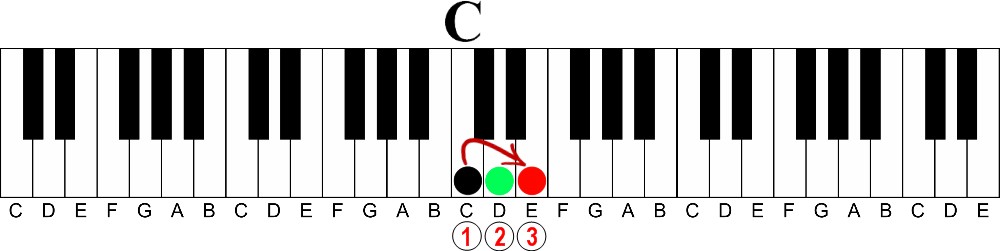 3rds and 6ths are simply inversions of each other. If you have a 3rd on top of a note, it becomes a 6th interval underneath it.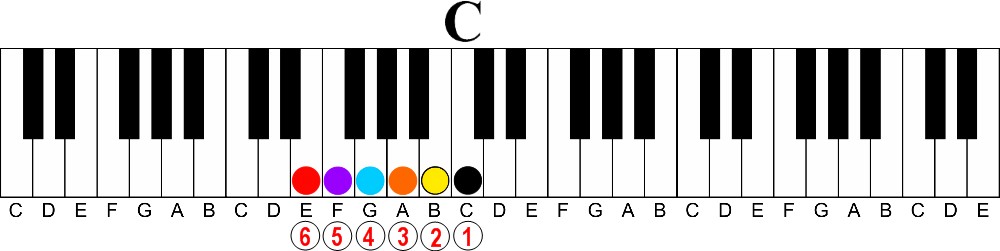
Here are all 6th intervals in the key of C Major in the context of melody notes.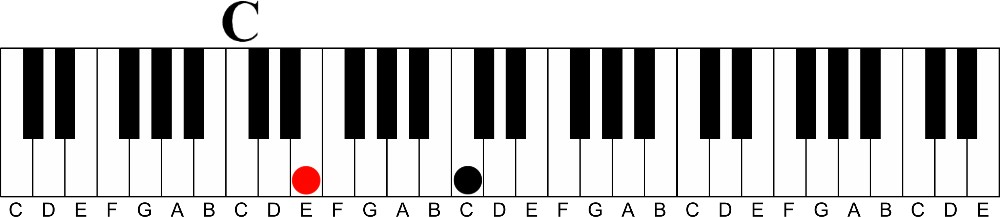
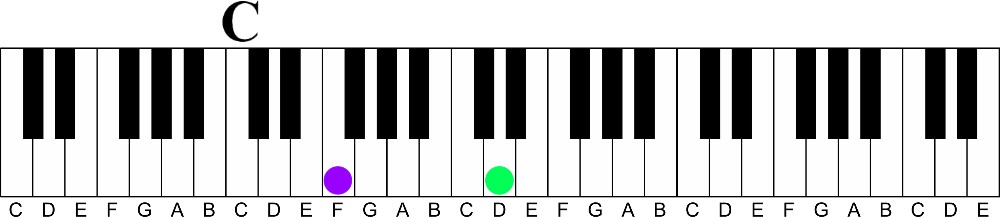
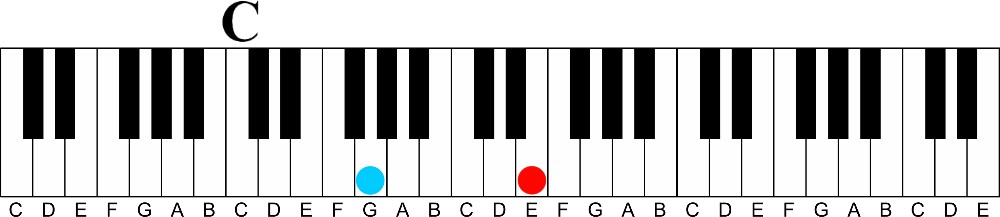
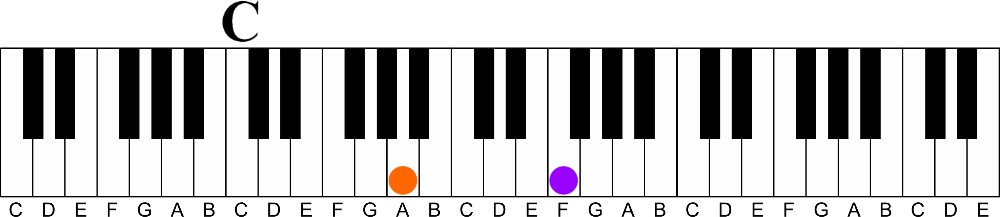

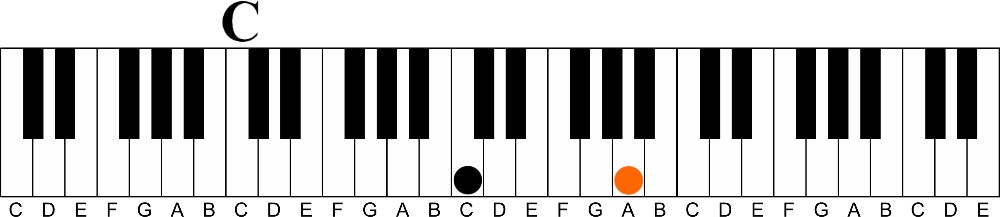
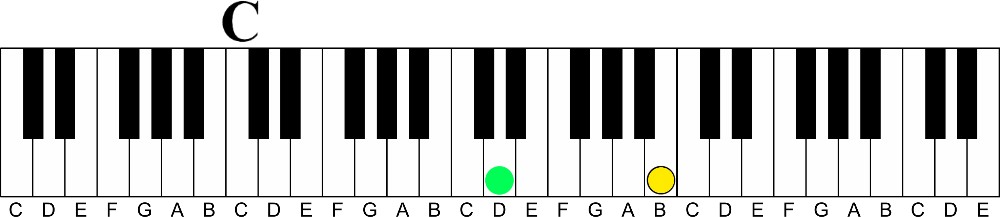
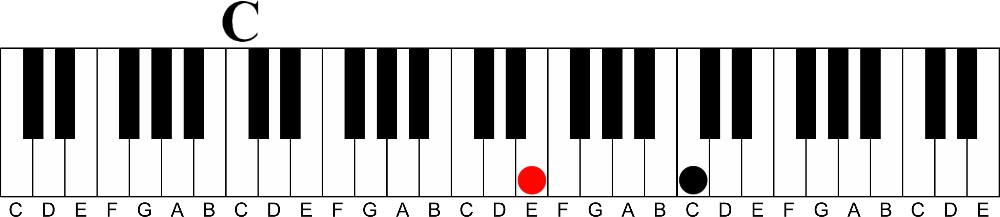
So how are these intervals useful in a real song or piece of music?
Even though you may have chords in which to harmonize under a melody, there are times when you may have a succession of singular melody notes. And if those melody notes are usually not smaller than 8th notes, it can be a viable option to harmonize those with 6ths.
This excerpt from a lead sheet has a succession of 8th melody notes between chords. Rather than play them singularly, you can play them with 6ths underneath.
For example if you have G as your melody note in the key of C Major, the 6th underneath it is B.But if you're in the key of F Major and G is your melody note, the 6th underneath it is B flat.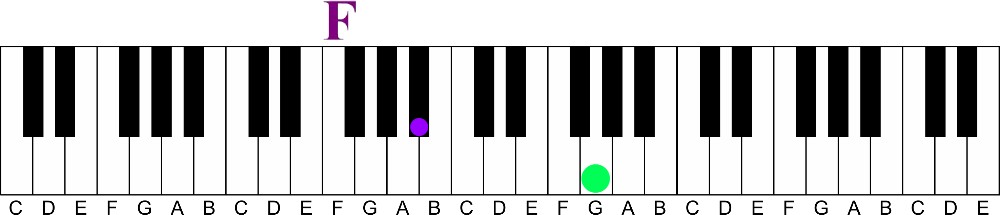 Why? Because for one thing, G in the key of C Major is the 5th tone and when you place a 6th underneath it, it is a Major 6th. G in the key of F Major is the 2nd tone and is harmonized with a minor 6th. (there's no B in the key of F Major)
This isn't to say that you must use only the 6th tones that are in the key you're playing in. You can use 6th tones that aren't in the key you're playing in and they may sound interesting. Or at the very least, may not stand out as "wrong", because they pass very quickly in the music.

One more thing about harmonizing with 6ths. Sometimes melody notes consist of accidentals (notes that are not in the key). When this is the case, you may be playing a Major 6th where you would normally play a minor 6th under a melody note and vice versa.
Until next time, Go Play!


Greg Lee
Latest posts by Greg Lee (see all)
- What is a minor/Major 7 Chord? - October 26, 2023
- 7 Chord Substitutions that Professionals Use - October 19, 2023
- 5 Simple Chord Tricks to Sound Amazing - October 5, 2023